The Longevity Habits That Actually Matter (Ranked by Evidence, Not Hype)
Longevity has become a luxury industry — cold chambers, peptide stacks, $200-a-month supplement subscriptions sold by men who take 90 pills a day. Meanwhile, the actual science of long healthy life keeps returning the same unglamorous verdict: the biggest levers are free, boring and available at your nearest sidewalk. Here are the longevity habits ranked by evidence weight — and the honest news is that you already know how to do all of them.

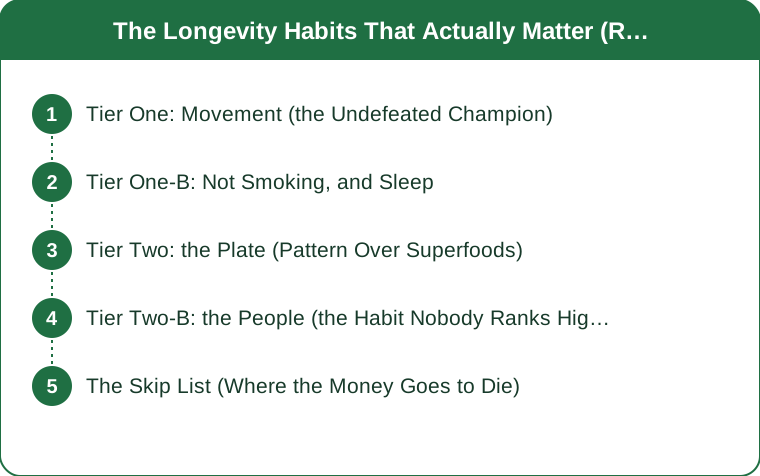
Tier One: Movement (the Undefeated Champion)
If longevity science has one consensus, it is this: regular physical activity is the closest thing to a life-extension drug that exists — large studies associate meeting basic activity guidelines with years of additional life and, more importantly, more years of capable life. The prescription is humbler than fitness culture admits: brisk walking 20–30 minutes most days captures a huge share of the benefit, and adding two strength sessions weekly protects the muscle and bone that determine whether your 80s involve hiking or handrails. Steps first, then strength. Everything else is garnish.
Tier One-B: Not Smoking, and Sleep
The other two heavyweights: not smoking remains the single largest modifiable factor in the entire literature (if you smoke, quitting is worth more than every other habit in this article combined — and support doubles success rates), and sleep is the quiet giant: chronic short sleep associates with worse cardiovascular, metabolic and cognitive aging, while consistent 7–8 hour nights sit under every strong longevity profile ever studied. Neither photographs well for Instagram. Both outperform anything sold in a subscription box by an order of magnitude.

Tier Two: the Plate (Pattern Over Superfoods)
Nutrition’s longevity verdict is a pattern, not a pill: the diets of every long-lived population studied — Mediterranean, Okinawan, the famous Blue Zones — share bones: mostly plants, legumes as a staple, fish over processed meat, olive oil or its local equivalent, and meals that stop before stuffed. No single superfood appears; the ensemble does. The actionable translation: beans several times weekly, vegetables at volume, fish twice a week, ultra-processed food demoted from daily default to occasional guest. Boring. Proven. Delicious, if you let it be.
Tier Two-B: the People (the Habit Nobody Ranks High Enough)
The famous Harvard adult-development study and a mountain of loneliness research agree on something wellness culture keeps forgetting: relationship quality is one of the strongest predictors of long-term health and happiness — social isolation carries mortality risk in the same league as smoking-adjacent habits. Longevity, it turns out, is a team sport: the weekly friend call, the walking group, the family dinner defended against calendars, the neighbor you actually know. Investing in people is not the soft version of health optimization. It is a tier-two habit with tier-one returns and zero cost.
The Skip List (Where the Money Goes to Die)
What the evidence does not support at anything near the marketing volume: exotic supplement stacks (beyond correcting tested deficiencies — vitamin D and friends — the longevity-pill graveyard is vast), extreme protocols sold as biohacks (the 90-pill routines are experiments with a sample size of one wealthy man), and anything promising to reverse aging on a subscription basis. The uncomfortable business truth of longevity: the interventions with the strongest evidence — walking, sleep, beans, friends, not smoking — cannot be marked up. Which is exactly why nobody advertises them.
Longevity, ranked honestly: move most days, sleep like it matters, do not smoke, eat mostly plants with legumes on repeat, and hold your people close — then feel free to ignore nearly everything sold under the longevity banner. The compounding starts whenever you do, and every decade of consistency pays out in the currency that actually matters: more good years, not just more years. The sidewalk is free. The beans cost forty cents. Begin there.
Keep Reading
This article is for general informational purposes only and is not medical advice. Always consult a qualified health professional for guidance specific to you.