Muscle Is the Longevity Organ: The Case for Lifting Like Your Lifespan Depends on It
The research keeps arriving at the same undignified conclusion — the strongest predictor of aging well is how much muscle you carry and can use — making muscle less a gym trophy than a longevity organ. The case, the timeline and the prescription by decade.

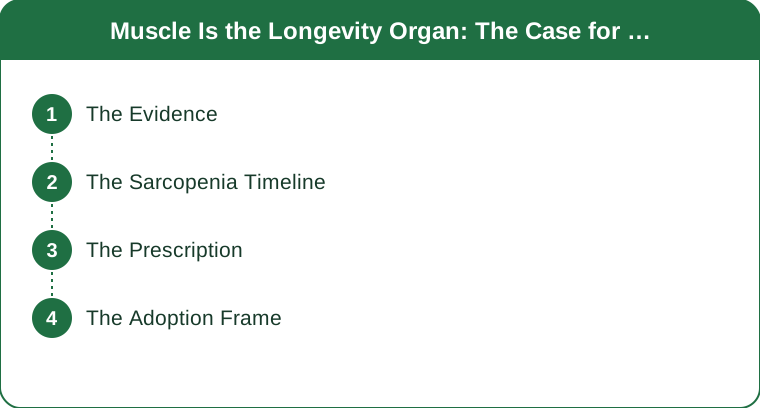
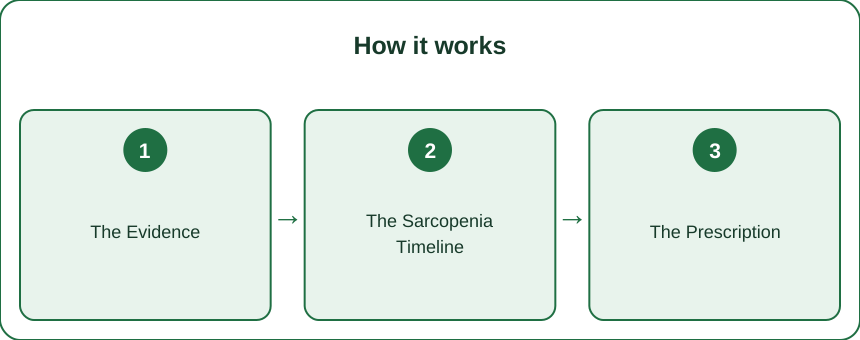
The Evidence
Muscle’s mortality receipts: the strength-mortality studies (grip strength and leg strength predicting lifespan across huge cohorts — the grip chapter’s marker being a window into total muscle), the survival-reserve logic (the hospital stay, the illness, the fall — every crisis taxing muscle; the reserve that decides whether the setback is a chapter or an ending; the protein bank the body raids when sick), the metabolic organ role (muscle as the glucose sink from the blood-sugar chapters — the insulin-sensitivity infrastructure; the type-2 risk falling as muscle rises), the independence connection (the sit-rise test and stair capacity being muscle tests — the daily-life abilities that define aging well; the nursing-home admission predictors being strength predictors), and the framing shift (muscle reframed from aesthetics to organ — the lifting reframed from vanity to medicine; the strongest argument in this library’s entire strength wing).
The Sarcopenia Timeline
The decline schedule: the thirties start (the muscle loss beginning around 30 — the 3-8% per decade drift that accelerates after 60; the invisible early decades where the account quietly drains), the use-it-or-lose-it mechanics (the decline being HALF biology, half disuse — the sedentary acceleration versus the lifter’s near-flat line; the masters-athletes studies showing what’s biology and what’s couch), the anabolic-resistance layer (the older muscle responding less to the same protein-and-training dose — the stimulus that must grow louder with age per the perimenopause chapter; the reason the prescription scales up, not down), the fast-twitch bias (the power fibers going first — the speed-and-catch-yourself capacity; the falls connection; the reason the prescription includes moving fast, not just lifting slow), and the good news clause (muscle rebuilt at EVERY age — the nursing-home resistance studies showing growth in the nineties; the timeline being a default, not a destiny).

The Prescription
The minimum effective dose by decade: the universal core (two-plus weekly resistance sessions covering squat-hinge-push-pull-carry — the pattern doctrine; the progressive overload that never retires), the twenties-thirties assignment (build the peak — the highest muscle bank balance achievable; the training that’s easiest now and compounds forever), the forties-fifties assignment (fight the drift — the heavier-lifting emphasis from the perimenopause doctrine; the protein raised to 1.2-1.6g per kilo with the anabolic-resistance math; the power work added: the jump-and-throw tier scaled to joints), the sixties-plus assignment (the non-negotiable decades — the strength work as fall-and-independence insurance; the chair-squat to loaded-squat spectrum meeting everyone; the balance-and-power integration from the balance chapters), and the protein prescription (the per-meal anchors from the protein doctrine — the 25-30g doses that older muscle needs MORE, not less; the breakfast protein being the most-skipped, most-needed dose).
The Adoption Frame
Making it happen: the never-too-late evidence restated (the beginner gains at seventy rivaling relative gains at thirty — the studies that end the too-old excuse), the entry ladders (the bodyweight-and-band start from the beginner chapters — the home-dumbbell path, the machine circuit’s guided entry; the door matched to the person), the medical partnership (the conditions-and-doctor conversation for the complicated cases — the strength training that’s nearly-universally prescribed WITH management), the identity note (the lifting-for-lifespan frame recruiting people the aesthetics frame missed — the grandmother deadlifting for her granddaughter’s wedding dance; the why that sustains), and the compound close (muscle as the investment where the twenties deposit and the eighties withdraw — the organ you build being the organ that carries you; the barbell as longevity equipment, finally named). Two sessions weekly, protein at every meal, power in the mix: the organ, funded for decades.
Muscle is the reserve every health crisis taxes and the strongest aging predictor — two-plus lifting sessions weekly and 25-30g protein per meal, scaled UP with age, not down. Rebuildable at ninety; cheapest at thirty.
Keep Reading
This article is for general informational purposes only and is not medical advice. Always consult a qualified health professional for guidance specific to you.