Why Grip Strength Predicts More About Your Longevity Than Almost Any Other Fitness Metric
Quick Answer: Large population studies have repeatedly found grip strength to be one of the strongest predictors of overall mortality risk, cardiovascular health, and functional independence in older age — not because grip itself matters that much, but because it’s a reliable proxy for total-body muscle mass, neuromuscular health, and functional strength that’s easy to measure precisely.
Grip strength sounds like an oddly specific thing to obsess over, until you look at how consistently it shows up across decades of research linking it to broader health outcomes far beyond the hands.
Why would something as narrow as hand grip predict overall health outcomes?
Grip strength isn’t valuable because strong hands specifically prevent disease — it’s valuable because it’s an easily measured proxy for overall muscle mass and neuromuscular function, both of which decline together as a natural part of aging (a process called sarcopenia). A weakening grip tends to track alongside weakening muscle throughout the body, making it a convenient, standardized stand-in for a much broader physiological picture that would otherwise require far more complex testing.
This is similar to how a single blood marker can indicate a broader systemic process — grip strength is the fitness-world equivalent, cheap and fast to measure, but reflecting something much larger happening throughout the body.
What does the actual research show connecting grip strength to mortality risk?
Multiple large longitudinal studies, including research published in major medical journals tracking hundreds of thousands of participants across multiple countries, have found that lower grip strength correlates with higher all-cause mortality risk, independent of other factors like age and overall activity level. Some of this research has found grip strength to be a stronger predictor than blood pressure for certain outcomes, which is a striking result for such a simple measurement.
The effect holds across different populations and age groups, which is part of why it’s become a standard measurement in aging and longevity research rather than a passing trend.
Does building bigger forearms or doing grip-specific training actually improve these outcomes?
Not directly — the research doesn’t suggest that training grip strength specifically, in isolation from the rest of the body, produces the same longevity benefit as having naturally higher grip strength from overall physical activity and total-body muscle mass. Grip strength is a marker of broader strength and muscle health, not a lever you pull independently to gain the benefit; someone with strong grip from years of compound strength training has the whole-body adaptations that actually drive the association, not just strong forearms.
This distinction matters because it redirects the actual actionable takeaway away from grip-specific exercises and toward general strength training that builds total-body muscle mass, which is what genuinely correlates with the outcomes researchers care about.

How does grip strength connect specifically to functional independence in older age?
Grip strength correlates closely with the ability to perform daily functional tasks — opening jars, carrying groceries, getting up from a chair without using your arms for support, catching yourself during a stumble — all of which depend on a combination of strength and neuromuscular coordination that grip strength happens to reflect well. Declining grip strength in older adults is one of the earlier detectable signs of broader functional decline, often showing up before more obvious mobility issues become apparent.
This is part of why grip strength testing has become a standard component of geriatric health assessments, used as an early screening tool rather than a diagnosis in itself.
What should someone actually do with this information if they want to improve their long-term outlook?
The practical takeaway isn’t to train grip in isolation — it’s to prioritize consistent, progressive total-body strength training across major muscle groups (legs, back, chest, core) throughout adulthood, since that’s what actually builds and maintains the muscle mass and neuromuscular health grip strength reflects. Compound lifts like squats, deadlifts, rows, and presses that naturally involve gripping heavy loads build genuine grip strength as a side effect of building the total-body strength that actually matters.
Regular strength training two to three times per week, maintained consistently across decades rather than in short bursts, is what the research actually points to as protective — grip strength is simply the convenient marker researchers use to measure the result.
Is grip strength something worth actually tracking for yourself over time?
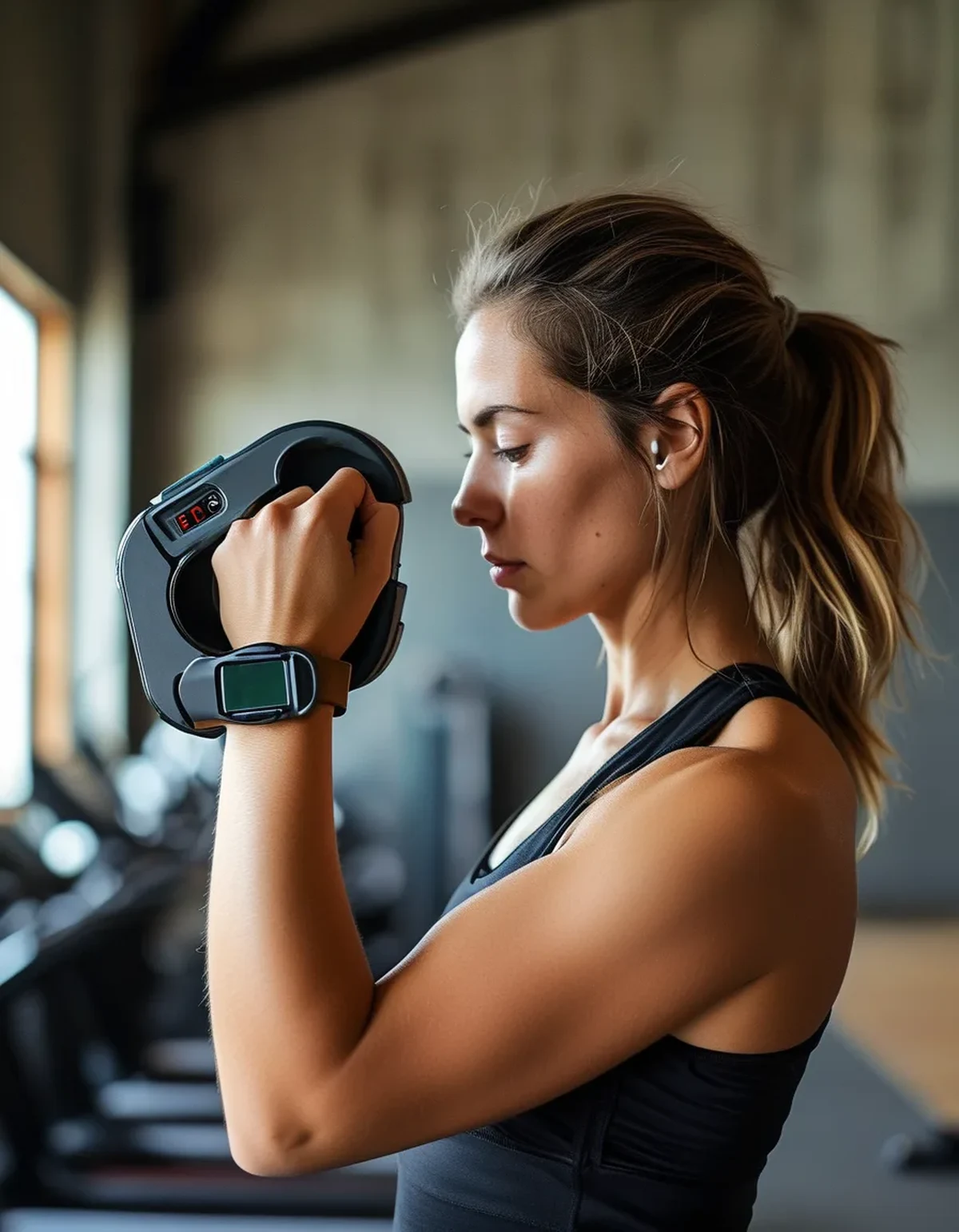
Yes — a simple hand dynamometer, inexpensive and widely available, lets you track your own grip strength over months and years as a rough proxy for whether your overall strength training is maintaining or improving total-body muscle health. A declining trend over time, even in someone who feels generally fine, can be an early signal worth addressing with more consistent strength training before more noticeable functional decline sets in.
Tracking it isn’t about hitting some specific number — it’s about noticing your own trend over time, since the relative change matters more than comparing your number to a population average.
FAQ: Grip Strength and Longevity Questions, Answered
Is there a specific grip strength number to aim for?
Normative ranges exist by age and sex, but tracking your own trend over time is generally more useful than chasing a specific population benchmark.
Does grip strength decline naturally with age regardless of training?
Some decline is a normal part of aging, but consistent strength training significantly slows the rate of decline compared to an inactive lifestyle.
Are there other simple tests that predict longevity similarly to grip strength?
Yes — the sitting-rising test and walking speed are two other simple functional measures that show similar correlations with long-term health outcomes.
TL;DR:
- Grip strength is a proxy for total-body muscle mass and neuromuscular health, not a value in itself
- Large studies consistently link lower grip strength to higher all-cause mortality risk
- Building grip strength in isolation doesn’t provide the same benefit as general total-body strength training
- Compound strength training two to three times a week is the actual actionable takeaway behind the research
The real message behind the grip strength research isn’t to train your forearms — it’s that consistent, total-body strength training is one of the most protective things you can do for how you age.
Keep Reading
This article is for general informational purposes only and is not medical advice. Always consult a qualified health professional for guidance specific to you.