Why Zone 2 Cardio Gets More Longevity Credit Than Any Other Training Zone
Zone 2 cardio sounds too easy to matter, which is exactly why most people accidentally train too hard to ever actually be in it. The zone’s longevity reputation isn’t hype, it’s tied to a specific physiological adaptation that harder training doesn’t produce the same way.

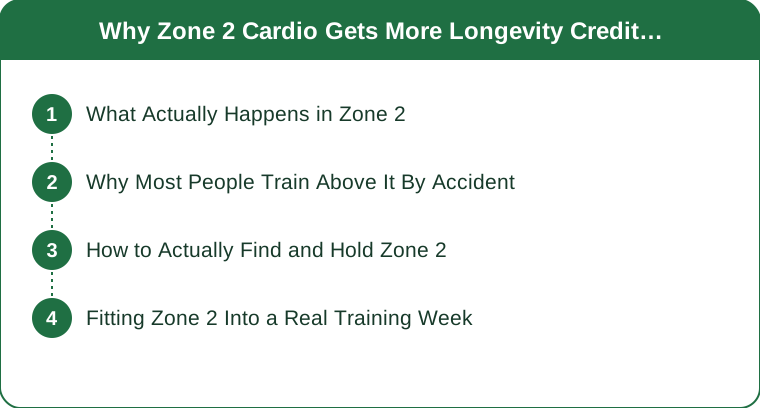
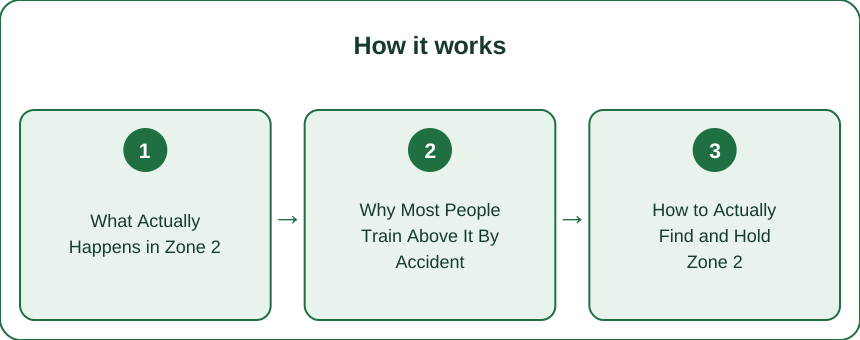
What Actually Happens in Zone 2
The physiology: the the-mitochondrial-density-driver (Zone 2 intensity specifically favoring an increase in mitochondrial density and efficiency, the cellular machinery most directly tied to long-term metabolic health), the the-fat-oxidation-emphasis (this intensity range training the body to rely more efficiently on fat as fuel, a metabolic flexibility marker linked to healthier aging), the the-recoverable-volume-advantage (Zone 2’s low intensity allowing far more weekly training volume without accumulating the fatigue harder cardio would, since the body recovers from it so much faster).
Why Most People Train Above It By Accident
The common error: the the-conversational-pace-overestimation (most people’s true Zone 2 pace being slower than what they assume counts as ‘easy’, since a comfortable conversational pace for a fit person still often drifts into Zone 3), the the-ego-pace-creep (an unconscious tendency to speed up when passed by another runner or walker, which is often enough to push out of Zone 2 without the person noticing), the the-no-heart-rate-monitor-guessing (attempting to gauge Zone 2 by feel alone without a heart rate monitor being unreliable, since perceived effort at this intensity is easy to misjudge).

How to Actually Find and Hold Zone 2
The practical method: the the-heart-rate-formula-starting-point (using a heart rate reserve or max-heart-rate-based formula as a starting estimate, then adjusting based on how sustainable the pace actually feels over 30-plus minutes), the the-nose-breathing-check (a rough field test where nose-only breathing should remain comfortable at true Zone 2 effort, if breathing forces the mouth open the pace is likely too fast), the the-consistency-over-single-session-focus (treating Zone 2 as a volume-building tool across multiple weekly sessions rather than judging its value from any single workout).
Fitting Zone 2 Into a Real Training Week
The integration: the the-base-layer-not-whole-plan (Zone 2 working best as a base layer of weekly training volume alongside, not instead of, some higher-intensity work for those with performance goals), the the-time-under-tension-patience (the mitochondrial adaptations Zone 2 targets taking months of consistent training to show up, meaning short-term impatience is the biggest threat to actually benefiting from it), and the frame (Zone 2 cardio’s longevity value comes from mitochondrial and fat-oxidation adaptations that only occur at a genuinely easy, sustainable pace — using a heart rate check rather than feel alone is what keeps a session from quietly drifting into a harder, less useful zone.)
The reputation Zone 2 cardio has earned in longevity research traces back to a specific cellular adaptation, an increase in mitochondrial density and efficiency, that simply doesn’t happen the same way at higher training intensities. The catch is that most people overestimate what their true Zone 2 pace actually feels like, since a pace that seems comfortably conversational for a reasonably fit person often quietly drifts into a harder zone without a heart rate monitor to catch it. A rough field check — nose breathing staying comfortable at the pace being held — helps confirm the intensity is actually low enough, and consistency across many weekly sessions matters far more than the intensity or length of any single one. Zone 2 isn’t meant to replace harder training for anyone with a performance goal, it works better as the base layer underneath it, and the adaptations it’s actually chasing take months of patient, genuinely easy effort to show up.
Keep Reading
This article is for general informational purposes only and is not medical advice. Always consult a qualified health professional for guidance specific to you.